
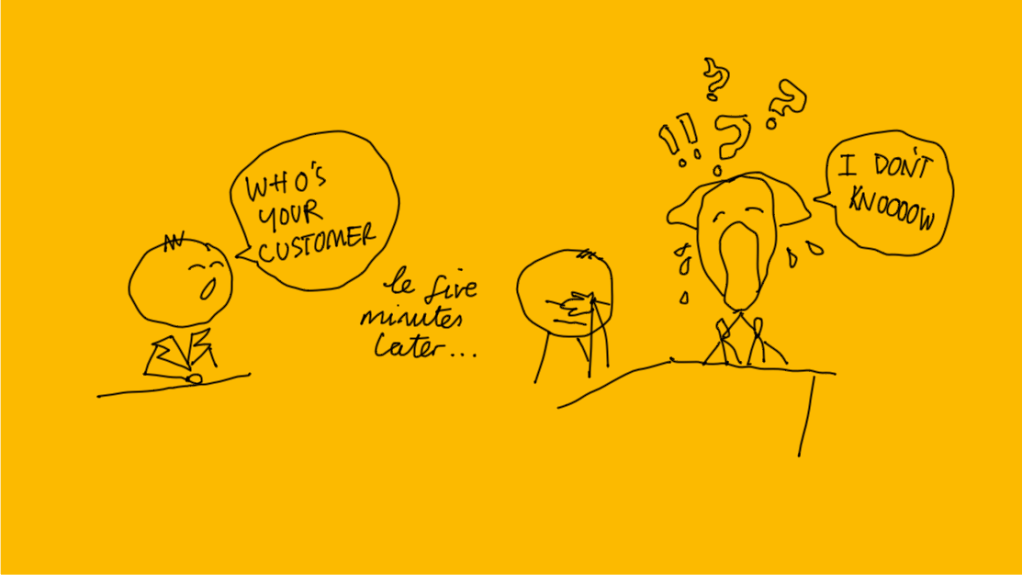
For an enterprise, concept of customer can be terrifying.
So much so, asking “who is your customer” is close to the top of my list of dangerous questions for a consultant to ask. You might think that’s antithetical to what a consultant is: avoidance of opening the conversation to discuss the customer would perpetuate the status quo, right? In theory, yes. In practice, no.
Why is this important?
The theory goes that if everyone in your company’s value chain knows what the customer wants, then your product will be better, because your colleagues can think about what they’re doing with the root cause in mind. They’ll be aligned on what to deliver. You’ve got implicit, baked-in efficiency: no cruft due to different team members having different ideas about what the goal is.
But…
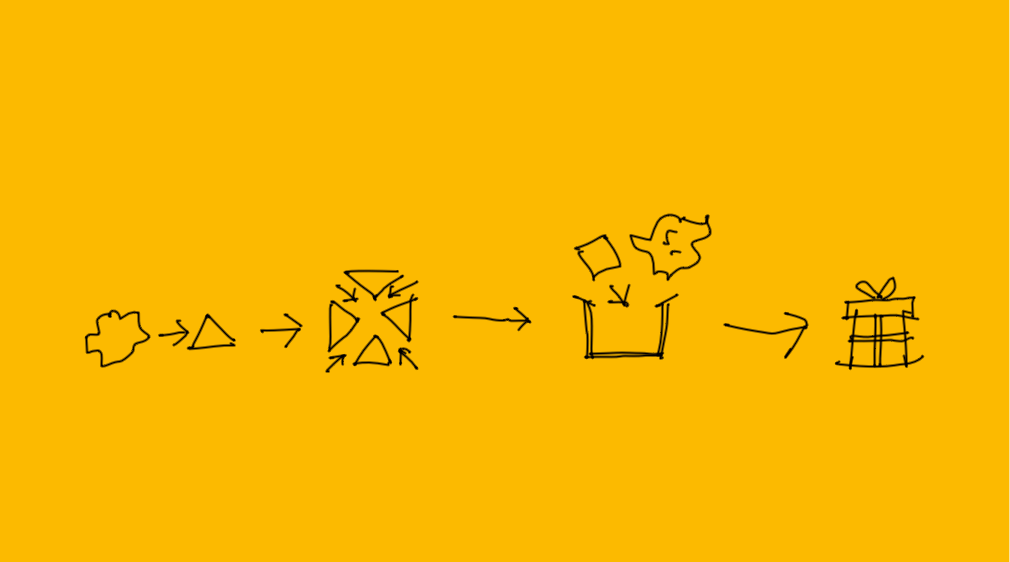
In practice, we get a tailspin, and the more complex the company, the longer and more wasteful the tailspin. Asking a middle to senior manager of a complex, diversified company, such as minerals or resources, who is your customer can cause significant confusion, because the customer could be:
- The next person in the value chain – the consumer of the work being done by this team
- The person paying for the existence of this team, even if they don’t directly receive the benefit
- The end customer – perhaps it’s another business
- Their customer – the end consumer
- The end customer with respect to a P&L – which might be another business within the same corporation
Equally, you may have different customers for your different products that exist at multiple points of the value chain. This is especially true of resources companies (notwithstanding the internal/external customer/consumer question, it might be the case that there are buyers at different stages of refinement of your product) and companies that have diversified into multiple products or services.
So when you’re in the head office of a multinational corporation working on an initiative potentially far removed from a paying customer, it can be distracting when asked “who is your customer?”
And…
Indeed, even more confusingly there are myriad consultants (me included) shopping around new business models: agile, lean, scaled, and so on. Adding that to the concept of customer fog can create for a rocky time.
Right…
The short answer is to structure your business — your business model — around your customer, for the simple reason that a business is nothing without its customers (by definition). But with the confusion mentioned, that’s easier said than done.
There are, more or less, two-and-a-half ways you can structure your business around your customer.
- Everyone focuses on the end customer, on the source of revenue.
This is loads easier for digital companies because their delivery is rapid and responsive.
To find out what your customer wants you just need to ask them. They can often be found just outside or at the end of the telephone. Then doing something about it is a matter of mashing a keyboard until you get something that looks like it might work. Customer testing and rapid prototyping all help bring what the customer wants to them pronto.
This is more difficult for something like a distributed mining company or an established automotive giant because there can be tens or even hundreds of steps that take place between the raw elements and selling the finished product. So what happens there? - Focus on the next point in the value chain.
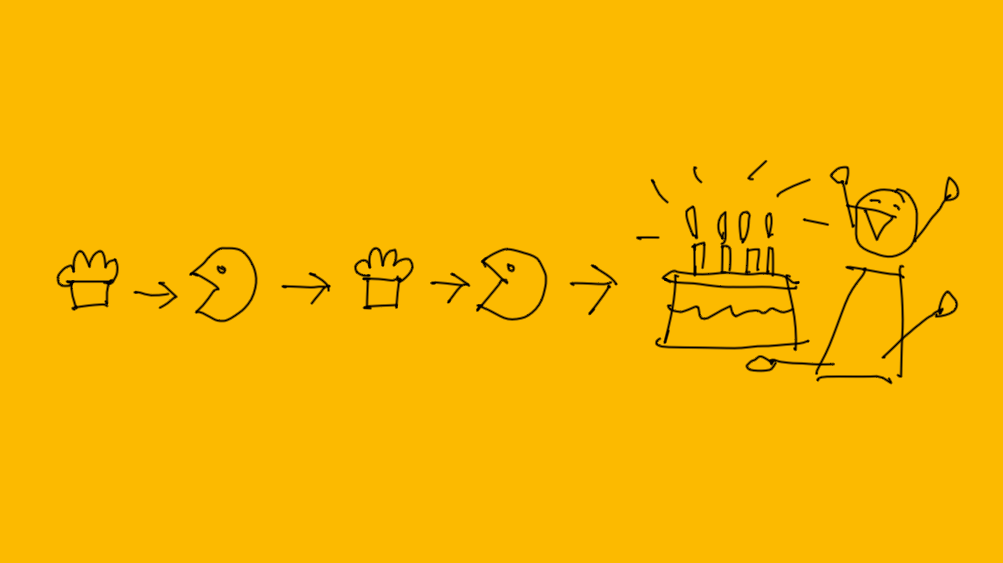
Companies whose production is physical must accept that responsiveness isn’t the same as that of digital. If there’s a production line, no matter how long, the parameters for it to change are limited (even if this is challenged by companies such as Mercedes, who have invested heavily in production capability able to deliver thousands of permutations of each model).
In the situation where there’s a production line, or on a larger scale a value chain, it’s more practical to think of the next point on the journey to the end buyer. Your customer, in effect, is whoever you’re handing your work to.
This isn’t perfect at all, because operating points in the value chain must have great faith in each other. Points that are removed from the customer need to be confident that what they’re producing will sell, and equally those at the end of the value chain (at the point of sale) need to be confident that the product is what the customer expects.
Fortunately, where the digital revolution has enabled digital producers to be ultra-responsive, there’s hundreds of years of precedent when it comes to physical production to copy. Problem solved, right?
Wrong. - …well, 2.5. Both
The ‘agile age’, which is now well and truly upon us, has disrupted production companies and the technology sector alike. Technology companies have less of a struggle as mentioned above, but the world is changing, and with it, customers. 2020 was a big year for change and brought forward a reality which is much more dynamic. What can physical product companies do?
The one thing that the digital revolution has brought is communication swiftness: it’s central feature. This means that it’s now easier and faster for communication to flow within a business. This is true of information about customers.
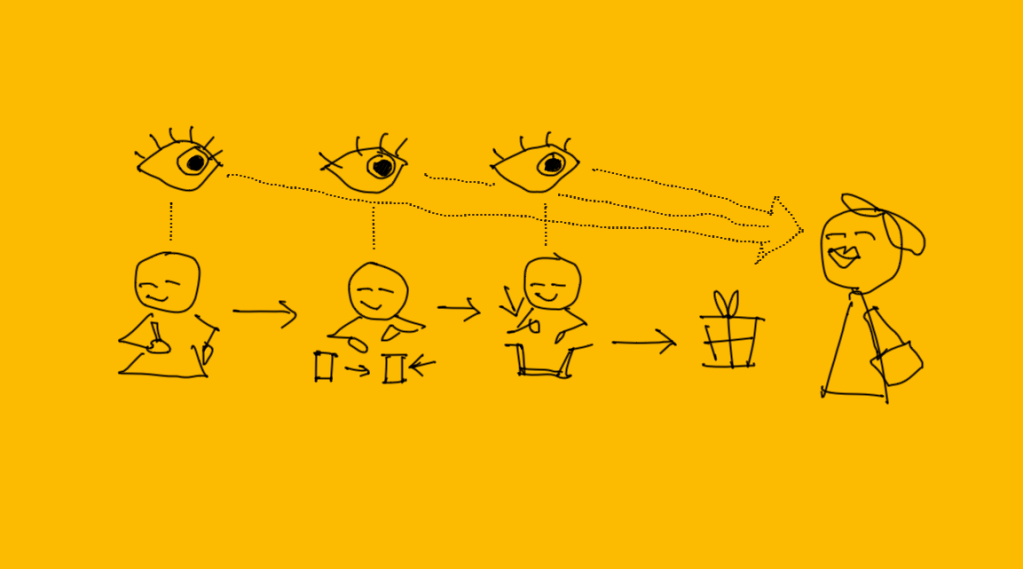
There is now no impediment for any part of the value chain to understand the end customer (who will ultimately pay for the product) and the next point in the value chain.
Fortunately, there’s also precedent for this – the principles of high visualisation that emerged in Japanese manufacturing, including Kanban, meant that all workers in a factory could be exposed to the most recent information known about customer demand. Today should be like that, but with big digital tellies giving up-to-the minute information.
Develop a model that reflects both your customer and your business
Structuring your business around your customer can be tricky, but it’s made simpler by understanding what business you’re in, what your customers want, and what the trade-offs are.
If your company is software-heavy (or, for that matter, services), you’re likely to find maximum benefit in a model that exposes your means of production to the customer as directly as possible.
If your business is in physical production or resources, there are very practical considerations that need to balance being responsive to customer demand, such as how often do you want to change a production run and how versatile your production machinery is. With that, it’s now highly relevant to expose your production line or value chain to what the customer is demanding.
And what of models? Off-the-shelf models, or lightweight customisations thereof, might work, but wouldn’t it be better to understand the flow of value in your organisation and ensure appropriate exposure to customer demand, then watch as a model emerges from that?

Leave a Reply